


Cricket is a sport where cricket statistics play an important role in explaining how teams and individual players perform. These numbers provide useful insights into different aspects of the game, from the runs scored by batters to the wickets taken by bowlers. They also help fans understand individual contributions, evaluate player performances, and compare results across different matches and competitions.
For cricket enthusiasts in Bangladesh, understanding these figures can make following international tournaments, domestic leagues, and national team matches more interesting. Whether watching Test cricket, One Day Internationals (ODIs), or Twenty20 (T20) games, knowing the basic statistics makes it easier to understand the progress of a match.
What Are Cricket Statistics?
Cricket statistics are numerical records used to measure player and team performances. They include information about scoring, dismissals, bowling, and other match activities.
These figures are commonly displayed on scorecards and included in match reports. They help describe how a batter performs, how effectively a bowler delivers, and how a team manages its innings.
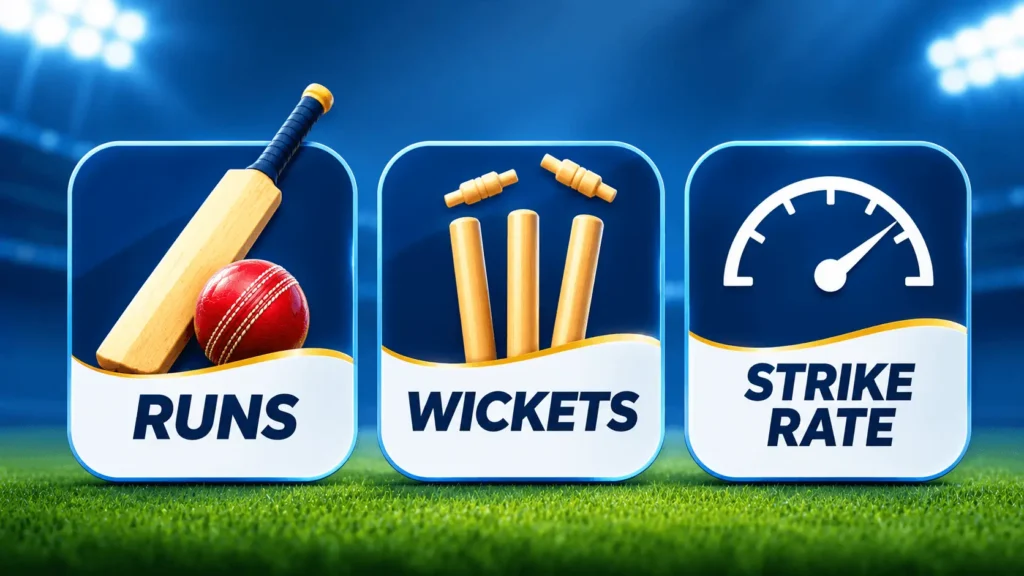
Three particularly important statistics are runs, wickets, and strike rate.
1. Understanding Runs in Cricket
Runs are the points scored by the batting team during an innings. The objective is to score as many runs as possible while following the rules of the game.
There are several ways to score runs:
- Running between wickets: Batters score runs by safely reaching the opposite ends of the pitch.
- Four: The ball reaches or crosses the boundary after touching the ground.
- Six: The ball crosses the boundary without touching the ground.
- Extras: Additional runs awarded through wides, no-balls, byes, and leg-byes.
For example, if a batter scores 45 runs and their teammates contribute another 120, the team has scored 165 runs, excluding any additional extras not already included.
Runs are important when comparing batting performances and understanding how a team builds its total.
2. What Are Wickets in Cricket?
A wicket refers to the dismissal of a batter. Each team generally has ten wickets available during an innings because eleven players make up the batting side, and the innings cannot continue with fewer than two batters.
Bowlers aim to dismiss opposing batters through different methods, including bowled, caught, LBW, run out, and stumped.
Wickets are also used to describe bowling performance. A bowler who takes several wickets during an innings has contributed to reducing the opposition’s batting lineup.
For example, a bowling figure of 3/25 means the bowler has taken three wickets while conceding 25 runs.
Wickets also influence how teams approach a match. Losing several batters early can create pressure, while maintaining wickets may provide opportunities to score more runs later.
3. Understanding Cricket Strike Rate
Strike rate measures how quickly a batter scores runs. It is commonly expressed as the number of runs scored per 100 balls faced.
The formula is:
Batting Strike Rate = (Runs Scored ÷ Balls Faced) × 100
For example, if a batter scores 60 runs from 40 deliveries:
(60 ÷ 40) × 100 = 150
The batter’s strike rate is 150.
Strike rate is particularly important in limited-overs cricket, especially T20 matches, where teams have fewer deliveries to build their scores.
A higher strike rate generally indicates faster scoring, although its importance depends on the match situation, playing conditions, and format.
4. Other Important Cricket Statistics
Apart from runs, wickets, and strike rate, several other figures help explain player performances.
Batting Average
Batting average measures a batter’s scoring performance by dividing total runs scored by the number of times they have been dismissed.
Bowling Economy Rate
Economy rate measures the average number of runs a bowler concedes per over. It is calculated by dividing the runs conceded by the number of overs bowled.
Bowling Average
Bowling average measures the number of runs conceded per wicket taken. A lower figure generally indicates that a bowler takes wickets while conceding fewer runs.
Partnerships
A partnership represents the combined runs scored by two batters while they are batting together. Strong partnerships can help teams recover from early wickets or build competitive totals.
5. Why Cricket Statistics Matter
Cricket statistics provide a clearer picture of how a match develops. They help fans understand which players contribute to scoring, how bowlers influence an innings, and how teams perform under different conditions.
For example, comparing batting averages and strike rates can show the difference between a consistent batter and an aggressive scorer. Similarly, examining bowling averages and economy rates provides insight into a bowler’s effectiveness.
Readers exploring cricket-related information through platforms such as Most Play can use these basic concepts to better understand match reports and sporting discussions.
However, statistics describe previous performances rather than guarantee future results. Cricket remains unpredictable, and factors such as weather, pitch conditions, injuries, and team strategies can influence match outcomes.
Conclusion
Runs, wickets, and strike rate are three fundamental statistics that help explain cricket performances. Runs measure scoring, wickets represent dismissals, and strike rate shows how quickly a batter accumulates runs.
Learning these figures makes scorecards easier to understand, players easier to compare, and different cricket formats easier to follow. For fans in Bangladesh, developing a basic understanding of cricket statistics can make watching and discussing the sport even more engaging.